

What Basic Facilities And Services Does La Rinconada Lack?
Hypoxia City
At 5100 meters' height, a Peruvian gold mining boondocks is the world's highest settlement—and a good place to study how life at extremely low oxygen levels ravages the torso
12 September 2019
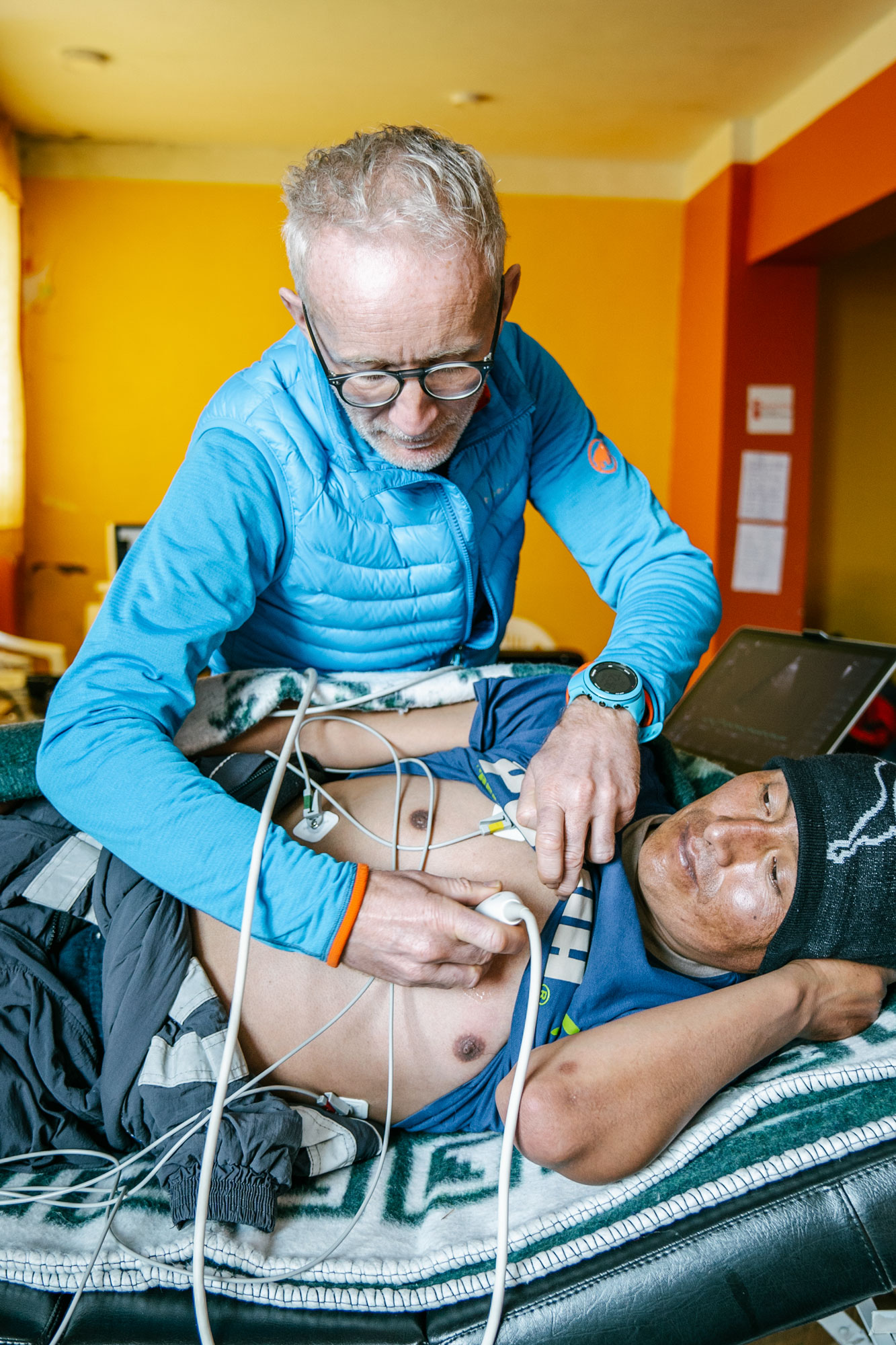
On a cold, gray morn earlier this twelvemonth, Ermilio Sucasaire, a gold miner, saturday in a white plastic chair with a stack of papers and a pen in his hand. His inquisitive optics scanned a large room where a group of scientists were performing tests on his colleagues. One fellow miner rode a bicycle, panting heavily, electrodes attached to his chest. Some other man had taken off his dirty sweater and was lying on a wooden bed, covered with blankets; a European researcher pressed an instrument against his neck while peering at a laptop.
Sucasaire was next—after he had signed a consent form and filled out a long questionnaire about his wellness, life, piece of work history, family unit, and drinking, smoking, and coca-chewing habits. "I'thousand looking forwards to it," he said.
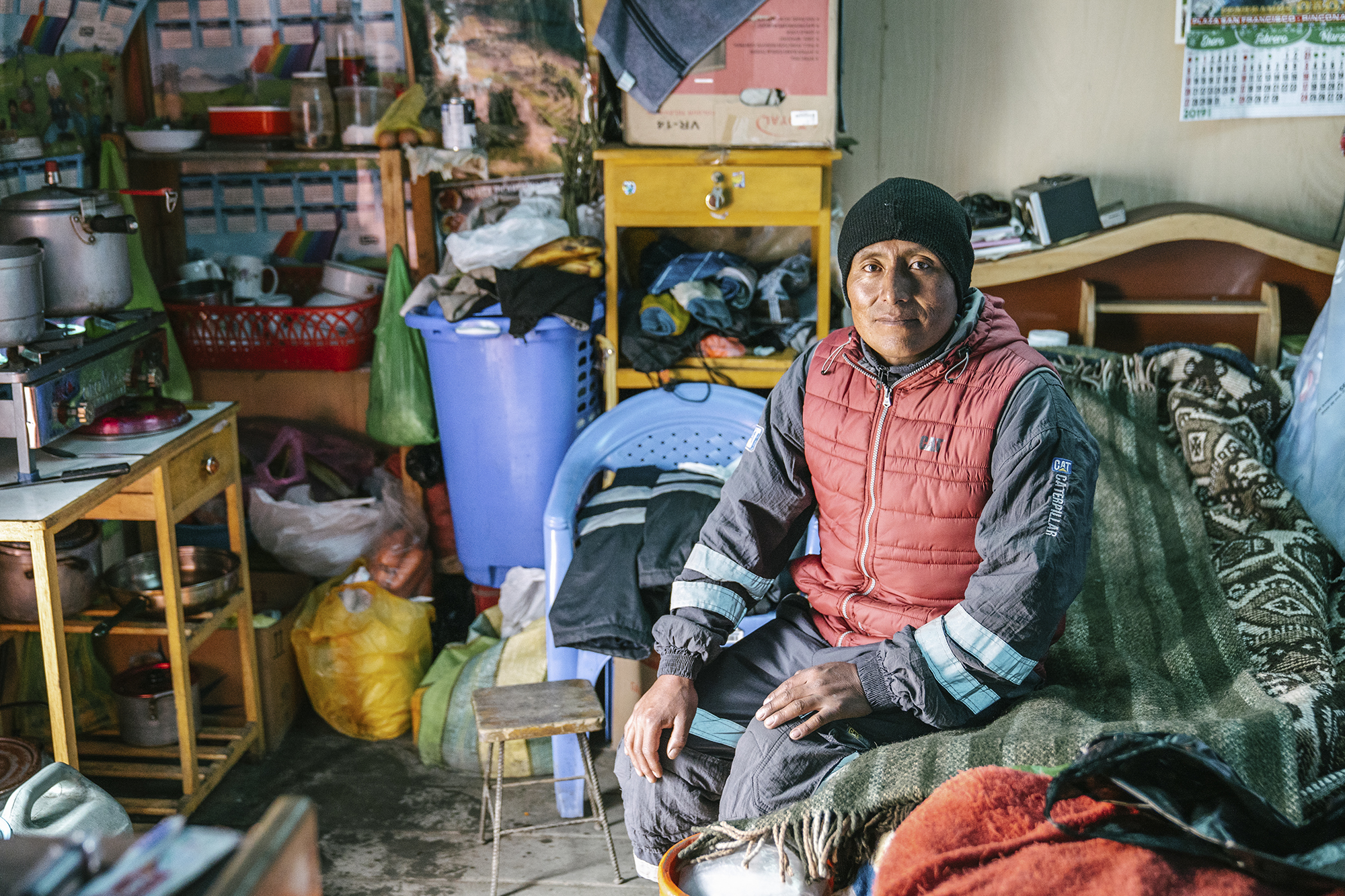
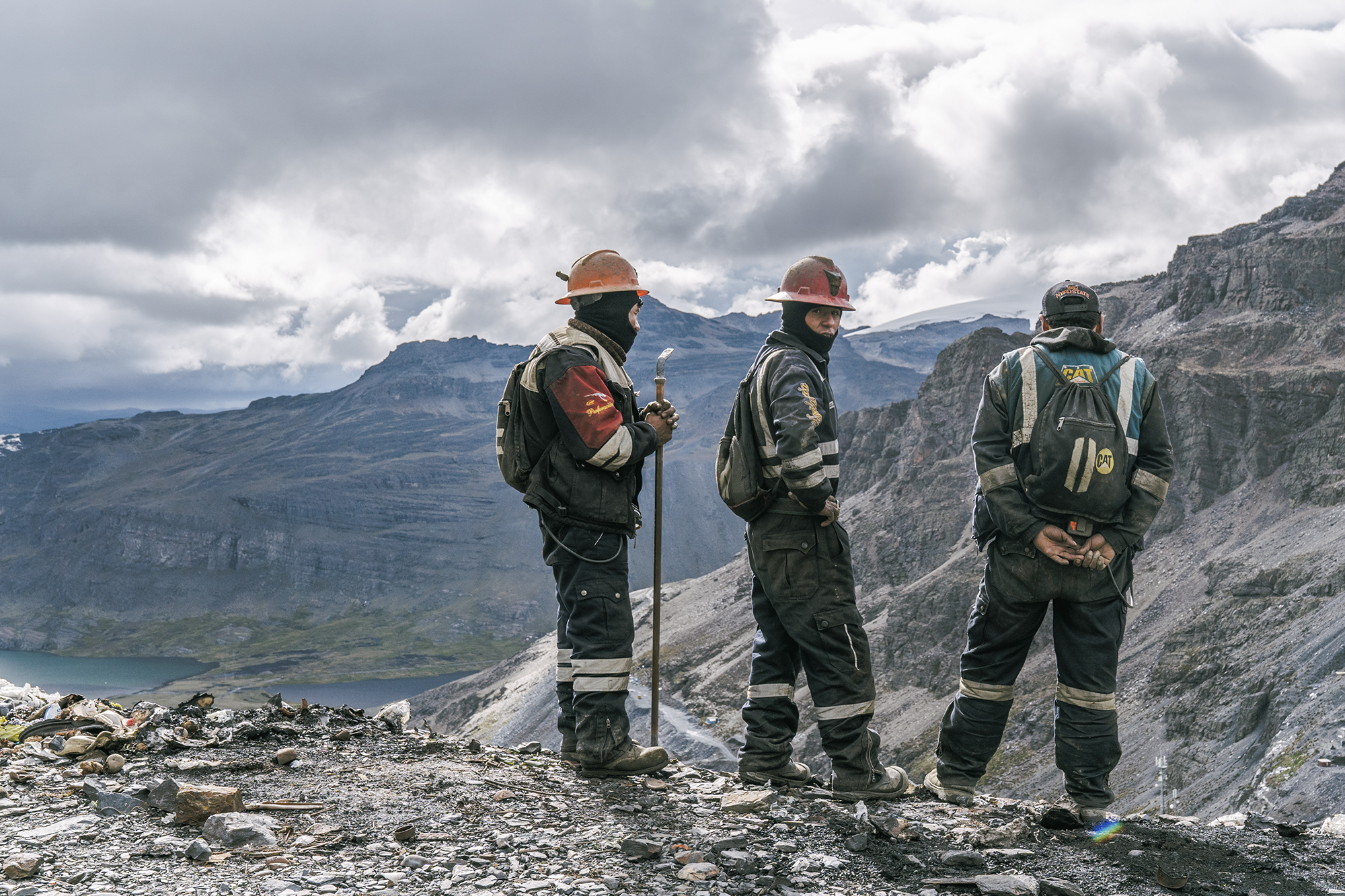
The scientists, led by physiologist and mountain enthusiast Samuel Vergès of the French biomedical enquiry agency INSERM in Grenoble, had set upwards a makeshift lab here in the globe's highest human settlement, a gold-mining boomtown at 5100 meters in southeastern Peru. An estimated 50,000 to 70,000 people alive here, trying to make information technology—and, many hope, strike information technology rich—under brutal conditions. La Rinconada has no running h2o, no sewage system, and no garbage removal. It is heavily contaminated with mercury, which is used to extract the gilded. Piece of work in the unregulated mines is dorsum-breaking and dangerous. Booze abuse, prostitution, and violence are mutual. Freezing temperatures and intense ultraviolet radiation add to the hardships.
La Rinconada'south most defining feature, notwithstanding, the i that lured the scientists, is its thin air. Every breath you accept here contains half as much oxygen as at body of water level. The constant oxygen deprivation can cause a syndrome called chronic mountain sickness (CMS), whose hallmark is an excessive proliferation of red blood cells. Symptoms include dizziness, headaches, ringing ears, slumber problems, breathlessness, palpitations, fatigue, and cyanosis, which turns lips, gums, and hands purplish blue. In the long run, CMS tin lead to eye failure and expiry. The condition has no cure except resettling at a lower distance—although some of the damage may be permanent.
CMS is a pressing wellness threat for the roughly 140 million people worldwide who live to a higher place 2500 meters. In Republic of bolivia's capital of La Paz, which sits at 3600 meters, an estimated vi% to viii% of residents—up to 63,000 people—accept CMS. In some cities in Peru, the rate is as loftier every bit 20%. La Rinconada is the global capital of CMS; researchers estimate that at to the lowest degree i in iv residents suffers from the illness.
Like many chronic diseases, CMS gets short shrift from public health officials, says Francisco Villafuerte of Cayetano Heredia Academy in Lima. "In Peru, it'southward a neglected disease, despite the fact that one-third of the population lives higher up 2500 meters," says Villafuerte, who studies CMS but was not involved in the La Rinconada study.
A treatment could make a huge difference hither and elsewhere, Vergès says. But to develop 1, researchers need to understand what drives the delinquent production of cerise blood cells, how information technology affects the body, and why it is a problem only in some people. Researchers also want to know what genes are involved and how recent human evolution has shaped them. A deeper agreement of CMS might help patients with cardiovascular disease, who too suffer from a lack of oxygen, says cardiologist Gianfranco Parati of the Italian Establish for Auxology in Milan, whose colleague Elisa Perger took role in the report.
To reply those questions, the INSERM team trucked scientific equipment worth €500,000 upward a muddy, potholed road in February for a 12-twenty-four hour period mission. The programme was to compare 35 men suffering from CMS, all highlanders, with 20 good for you residents and with good for you people living at lower elevations. The try was unprecedented, scientifically and logistically. Peru has a long history of CMS research—Carlos Monge Medrano, a Peruvian doctor, first described the disease in 1925. Just most scientists work in Cerro de Pasco, a mining boondocks in the Cardinal Andes at a essentially lower altitude, 4300 meters. Nobody had always done a study at La Rinconada's meridian.
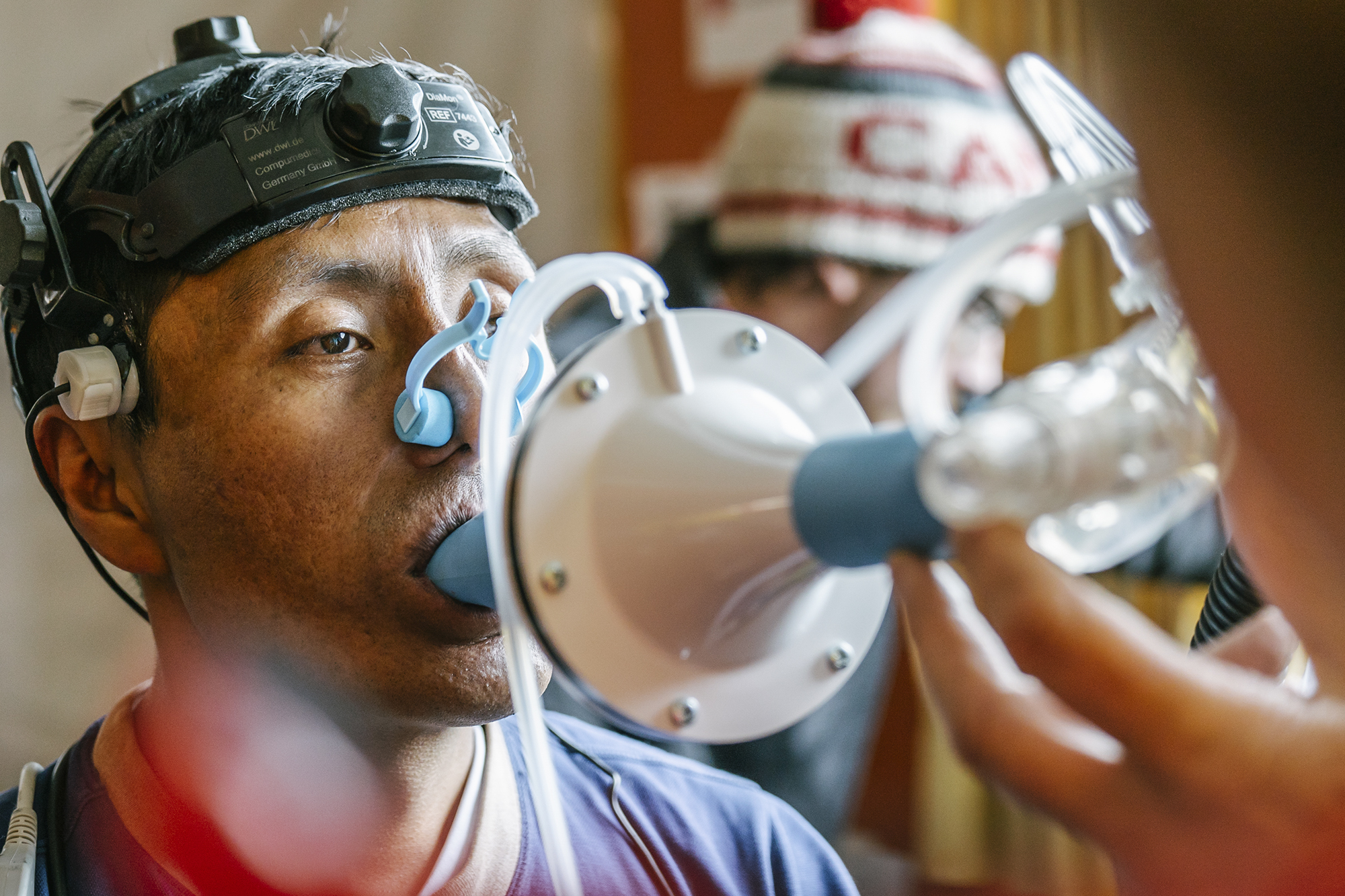
Sucasaire heard virtually the study on local radio. He was one of hundreds of residents who came to the laboratory—in a dilapidated edifice owned by a mining cooperative—hoping to enroll. If selected, he would undergo several days of tests, including of his claret composition and circulation; his lung, centre, and encephalon function; and how his body behaved during practice and slumber.
Like others who showed upward at the laboratory, nevertheless, Sucasaire also hoped to become a medical checkup and mayhap treatment. La Rinconada only has one health clinic, which can't keep up with the burgeoning population. "My knees," the 42-year-former miner said. "They're painful and swollen. I can't walk downwards the slopes, I can't climb the stairs. I hope the doctors can assistance me."
Close OFF A HUMAN'S oxygen supply for merely a few minutes and the result is irreversible brain harm, and then death. But lower the oxygen level and we are remarkably adept at coping, at least in the short term. Yes, lowlanders who ascend to 2500 meters or higher ofttimes develop acute mountain sickness, including headaches and nausea. (Many Peruvian hotels have oxygen handy for miserable tourists.) Simply symptoms begin to clear within a twenty-four hour period or 2. The body adapts by making lots of actress red blood cells, which ferry oxygen attached to hemoglobin to organs and tissues.
Long-term living at high altitude is trickier. Many lowlanders have a hard time increasing their oxygen consumption enough for exercise and growth. Reproduction is peculiarly difficult—a problem the Castilian discovered when colonizing the Andes. In pregnant women, hypoxia frequently leads to preeclampsia, which can endanger both mother and baby, besides as premature nascency and low babe weights.
Populations that have occupied the high mountains for hundreds of generations do far better. Andeans have lived at loftier altitudes for 15,000 years or and then, and like the inhabitants of the Tibetan Plateau and the highlands of East Africa, they take evolved to cope with hypoxia through complex physiological changes. Over the past decade, scientists have pinpointed several genes and candidate genes underlying those adaptations. They evolved independently in the three groups; in Andeans, a key adaptation is elevated hemoglobin, which enables their blood to deport more oxygen. In some people, however, the level rises out of command every bit reddish blood cells proliferate, leading to CMS.
That excess of red claret cells makes the blood more viscous, straining the circulatory system. (Some subjects' blood here has an virtually tarlike quality, making serum samples nearly impossible to take.) Blood vessels, normally dynamic tubes that expand every bit needed, go permanently dilated. Blood pressure level in the lungs frequently goes up. The eye becomes overworked.
Other high-altitude groups adapted to the low oxygen without significantly elevated hemoglobin and exercise not suffer as much from CMS. Tibetans, for example, cope primarily past breathing more often and taking deeper breaths. A 1998 written report reported a CMS rate of simply 1.2% for native Tibetans living at loftier distance. In the few studies done in Ethiopian highlanders, researchers did not find CMS. In contrast, ane study in Cerro de Pasco indicated a prevalence of fifteen% for men ages 30 to 39 and 33% for those 50 to 59.
No proven therapies are bachelor. Phlebotomy, or bloodletting, is one remedy practiced in Peru; information technology relieves the symptoms for a couple of months, Villafuerte says. But the process is cumbersome and farther deprives the body of oxygen—which could, counterproductively, spur fifty-fifty faster production of ruby-red claret cells.
A few drugs accept been tried also. One, acetazolamide, is also used for astute mount sickness; information technology'due south believed to work past acidifying the blood, which stimulates breathing. In two trials in Cerro de Pasco, the drug lowered the blood's hemoglobin content and increased oxygen saturation. But fifty-fifty the biggest study, published in 2008, enrolled simply 34 people and lasted just half-dozen months. Whether the long-term benefits outweigh any side effects is unclear. "Yous would accept to take information technology as long equally you alive at loftier altitude," Villafuerte says.
LA RINCONADA IS A BUMPY 2.5-hour bulldoze from Juliaca, Republic of peru, a drab transit hub of 250,000 people at 3825 meters. Minivans charge $5 for the ride, leaving from Juliaca'southward double-decker station equally before long as people and luggage have filled every bachelor space.
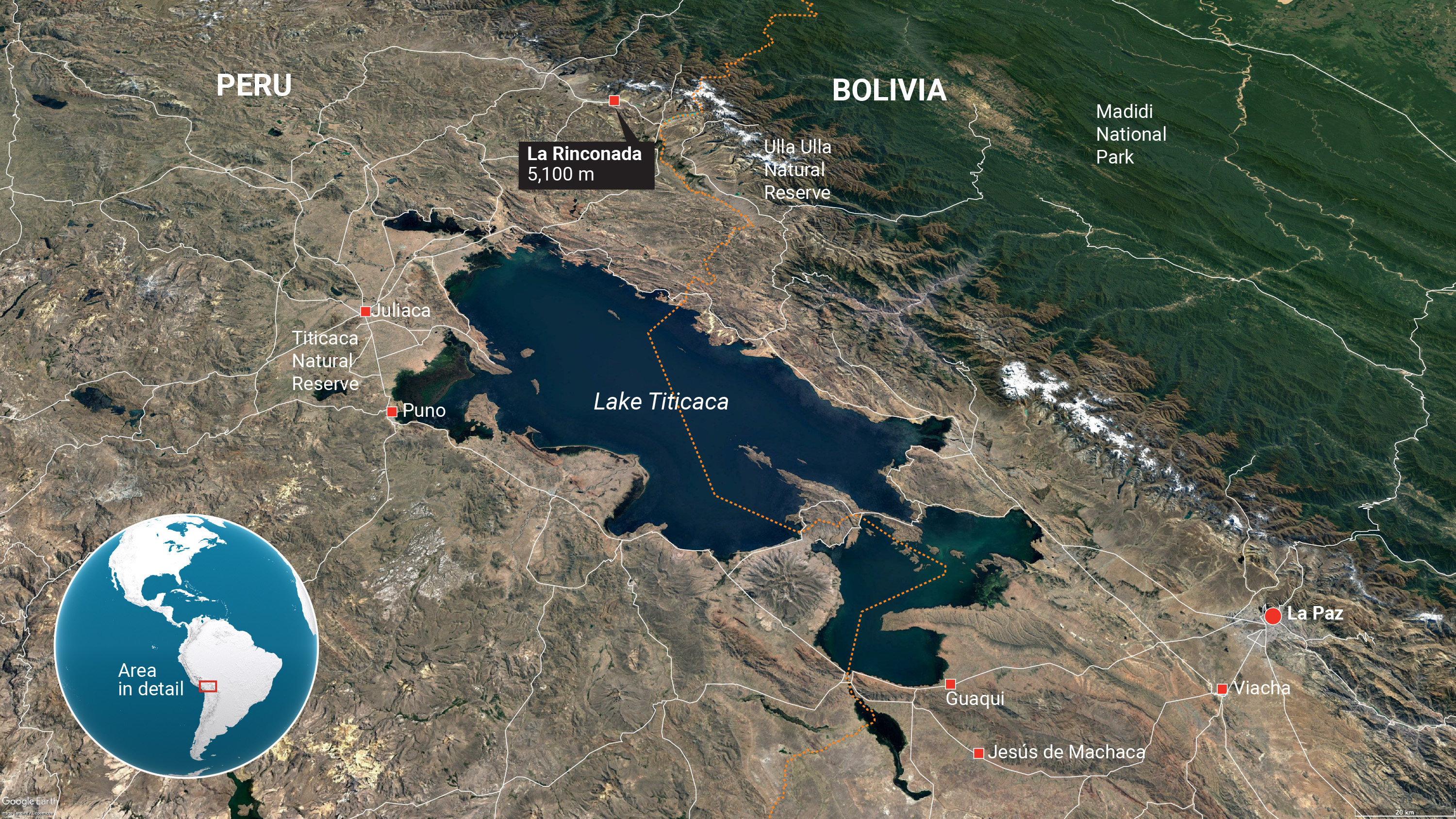
Ivan Hancco, a Peruvian dr. and member of the research team, get-go made that trip in 2007 when studying medicine in Puno, a nearby city and tourist destination on Lake Titicaca. More interested in research than clinical work, he was drawn to altitude sickness but didn't know much near La Rinconada. Few people in Peru do, he says. "I thought it was a small-scale town. I had no idea."
Just walking downward the decorated chief street here, Hancco could tell CMS was a much bigger problem than in Puno, 1300 meters lower. "Red optics, majestic lips and hands, you saw them everywhere," he recalls. He began to make frequent trips, showtime monthly and later bimonthly, to offer residents medical advice and meticulously record their complaints. Information technology resulted in what Vergès says is a unique long-term database on CMS and other health problems that includes more than than 1500 people. (Researchers have submitted a paper on insights gained from the database to a periodical.)
Vergès, too, grew up at high altitude, in Font-Romeu-Odeillo-Via, a French ski town at 1800 meters in the Pyrenees. Its center for high-altitude training has made it a popular destination for European athletes. Vergès himself was on a national ski team for several years and studied sport science and physiology at the University of Grenoble. In 2003, he earned a Ph.D. for work on respiratory dysfunction in endurance athletes, using his former teammates equally subjects.
Most of Vergès's studies take place at his lab in Grenoble, where he can simulate short stays at high altitude by using a mask or a low-oxygen tent. But fieldwork is what makes his centre beat faster—literally. In 2011, he hired a helicopter and took 11 healthy men on a x-infinitesimal ride to a research station at 4350 meters on France'southward Mont Blanc, where he measured blood flow to the brain and other parameters over vi days. (Ix subjects got sick, as did Vergès.) In 2015, he was role of an expedition in Tibet that took 15 lowlanders to 5000 meters over 10 days to study the long-term effects of hypoxia.
The La Rinconada study has its origins in a 2016 scientific meeting in Chamonix, a French resort almost Mont Blanc, to which Vergès had invited Hancco. They clicked, and Hancco decided to do a main's in Grenoble and is now pursuing his Ph.D. at Vergès'southward lab. Both researchers say Hancco'southward connections in La Rinconada and the trust he had built providing medical care were key to getting the study off the footing. He helped recruit logistical support, including from César Pampa, president of a grouping of mine owners. (Pampa lived in La Rinconada for years, but moved downward to Juliaca considering his ain CMS had become a serious health risk.) "Information technology was a unique possibility," Vergès says. "A dream come truthful."
Vergès had no grant for the study simply found sponsors, including a mountain apparel company that outfitted the team with clothing emblazoned with "Expédition 5300." (A slight exaggeration; one peak hovering over La Rinconada is 5300 meters, but the boondocks and most mines are at 5100 meters.) The squad produced a slick video, billing the written report as "a unique take a chance." And once they arrived in Peru in early February, the researchers kept their French audience updated through videos that showed the team panting in La Rinconada'southward steep streets and performing tests on the miners.
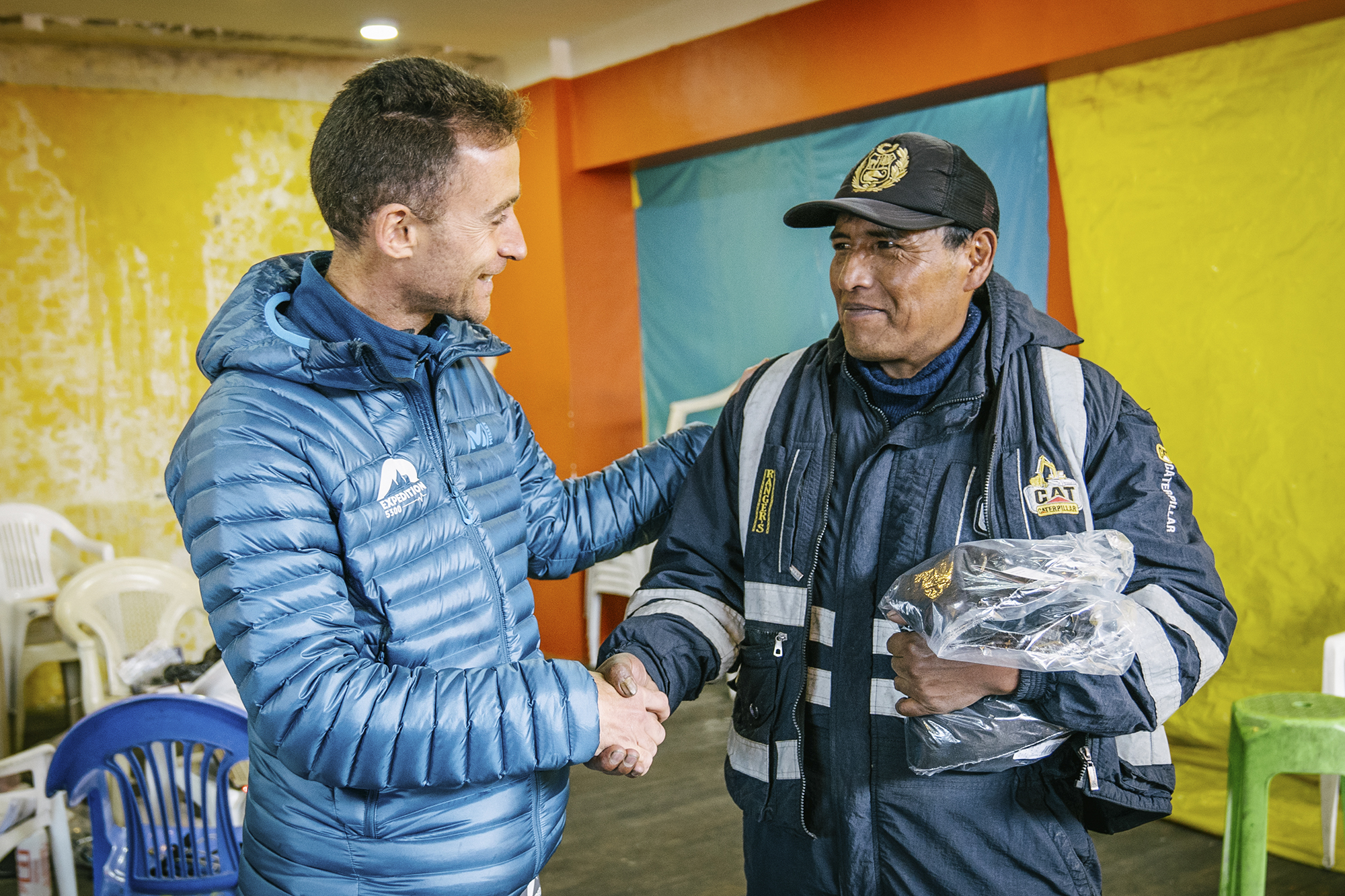
Built-in IN A VILLAGE on Peru'south lofty altiplano, Sucasaire first traveled here in 1995, at historic period 17, in search of a job. Since and so, he has left several times, once to try his luck at a coffee farm in Peru's northeast. Ultimately, he decided La Rinconada was the least bad option, despite the harsh conditions. "This is a forgotten town," he says. "The authorities doesn't intendance most us at all. They only think about their own interests. Nosotros have to notice a way to survive on our own."
Sucasaire is a member of the Aymara, an Indigenous group living in Republic of peru, Bolivia, and northern Chile. Because his ancestors lived on the altiplano for many generations, he is likely to deport genetic traits that help him live at high altitudes. But evolution had not prepared Sucasaire for life in La Rinconada. In initial testing, his scores on seven telltale symptoms, combined with lofty hemoglobin levels, indicated CMS, and he agreed to enroll in the study. For several days, he had to return to the center for testing that often lasted hours.
In one experiment, Sucasaire inhaled a minuscule amount of carbon monoxide, a toxic gas that binds to hemoglobin, to measure out the full amount of hemoglobin in his blood. In another, he patiently lay on his correct side while Stéphane Doutreleau, a French cardiologist, studied his centre with echocardiography.
One evening, Sucasaire came in for a sleep study conducted by Perger. She taped electrodes to his chest to record his heart charge per unit and fitted him with a movement tracker to monitor his breathing and detect whatsoever episodes of sleep apnea, a mutual occurrence during hypoxia. Wires led to a pocket-size recorder strapped to his wrist. On the tip of his left index finger, she clamped a modest blue device to monitor oxygen saturation in his blood. Then Perger sent him home. She acknowledged it wasn't the about comfy way to spend the night, but Sucasaire said he would sleep "con los angelitos"—with the little angels.
He lives a 10-minute walk from the lab, downwards muddy streets and trails. The i-room house he shares with three adult relatives is a windowless shack of corrugated metal that he bought vii years ago, one of thousands of like homes strewn across the mountainside. A niece was cooking dinner on a portable gas burner. Although information technology was summer, beds were piled with blankets; the house has no heating, and snow fell the nighttime before. "We just cover ourselves very well," Sucasaire said. For a bathroom, the family uses a foul-smelling public facility nearby. They must buy their drinking h2o, and it is far besides expensive, Sucasaire said.
He works at a mine a 20-infinitesimal walk from town. Vast mountains of trash, packed in pocket-size plastic bags, line the trail to the entrance. Outsiders are non immune in, he said.
Many Peruvian mines are operated by big international companies, merely gold mining in La Rinconada is "informal," or illegal. Sucasaire works 5 or 6 hours a day; it'due south such back-breaking piece of work that more is physically impossible, he said. He worries virtually the mine dust, humidity, and carbon monoxide. "Some of my colleagues have died at a immature age—50, 48, 45," he said. Fatalities from explosions and tunnel collapses are common. "There is no safety mechanism in place," says César Ipenza, a Lima-based environmental lawyer. "That's why in that location are accidents all the time."
Most mine owners don't pay their workers a salary; instead, one or more than days every month they allow a miner to have home all the ore he can comport in 50-kilogram sacks and to keep whatever gold it holds. (Some miners besides pilfer extra ore.) That arrangement, called cachorreo, turns life into a giant lottery; Ipenza calls it a "form of slavery." Some miners "become a good amount of golden," Sucasaire said, "and some leave town." They are a minority. Ordinarily, miners glean just enough to get by. But sometimes almost nothing is there.
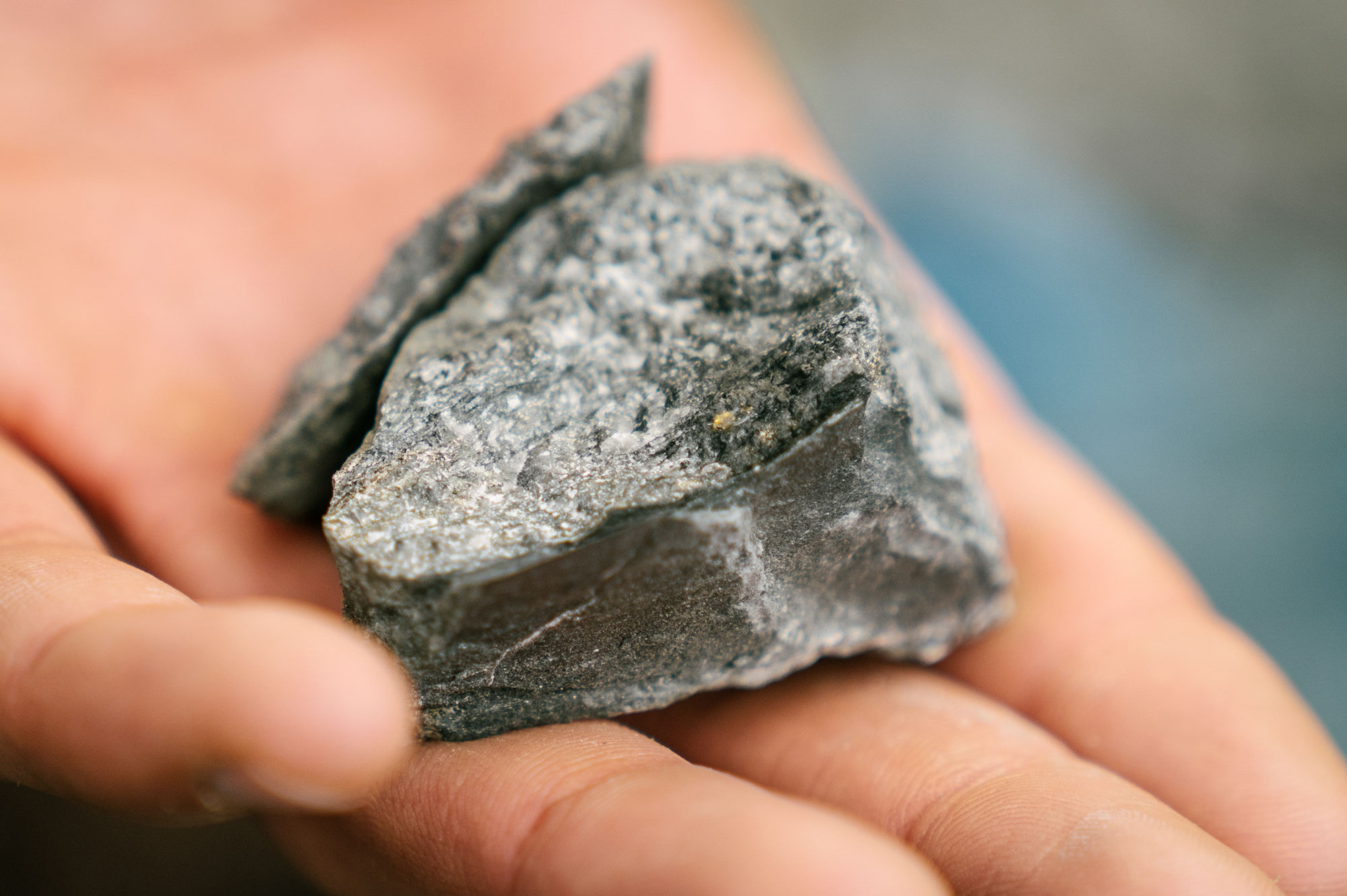
The miners have their ore to ane of the many small shops in town that advertise "compro oro" ("I buy golden"). To separate the gold, shopkeepers mix in mercury, creating an alloy. And then they utilise a torch to vaporize the mercury, leaving small clumps of pure aureate. The vapors seep through narrow metal chimneys, creating a toxic cloud that blankets the city and a nearby glacier that is the master water supply.
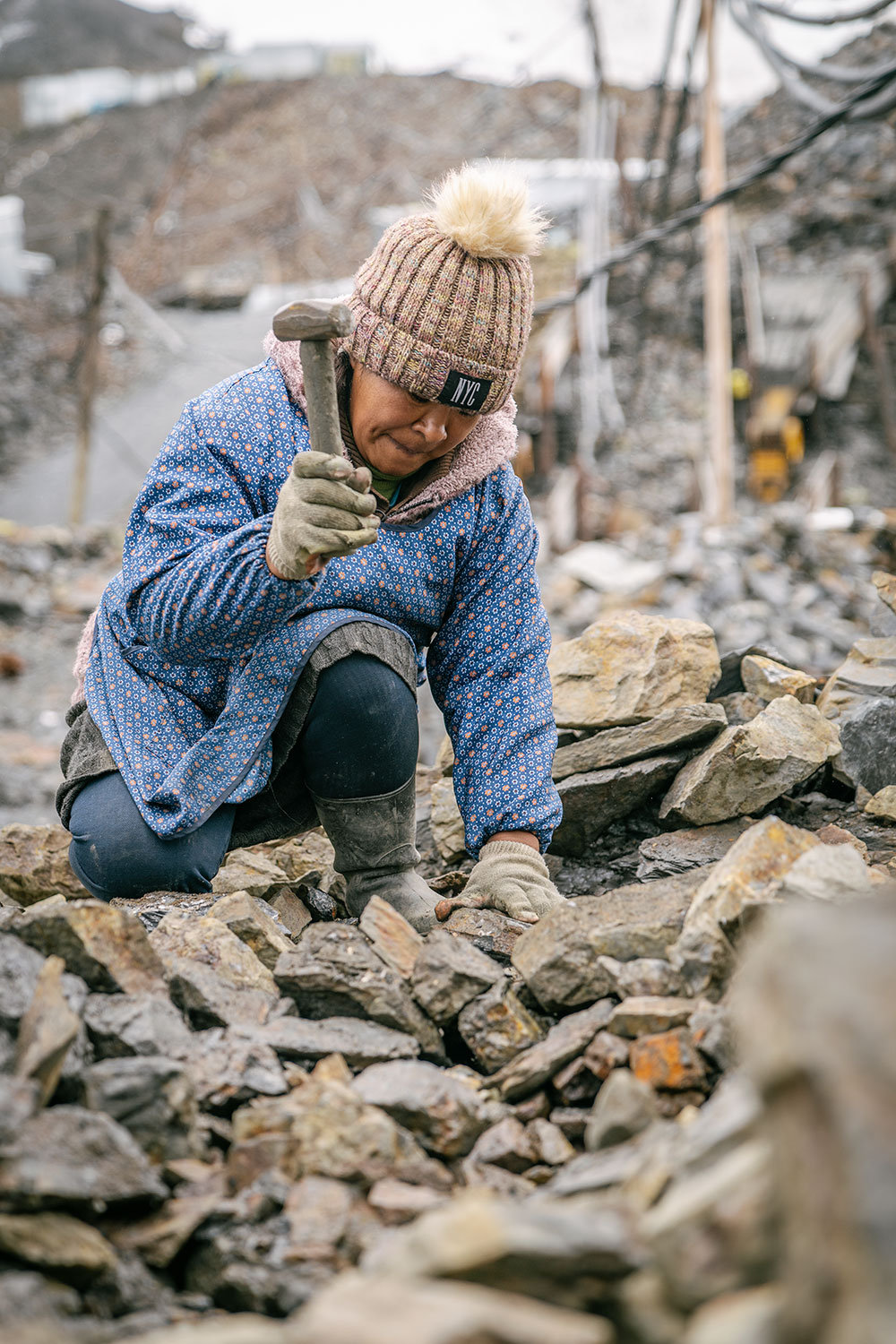
Women aren't allowed in the mines, but hundreds eke out a living nearby. On a steep slope, Nancy Chayña saturday shattering rocks with a hammer. She checked each chunk for glittering specks, throwing those that sparkled into a yellow pocketbook. Chayña said she had worked the rubble piles for xx years or so, for at least 10 hours a twenty-four hours. Her heavy clothes were thick with dust and her face parched by the icy winds and intense sunlight. Asked whether she'd adopt working in the mine itself, she chuckled and said yes. But women in the mines are said to bring bad luck, Sucasaire noted. And besides, the work is considered as well unsafe for women.
Republic of peru's regime has plans to "formalize" illegal mining here and elsewhere, which could assistance improve working weather. So far, withal, petty has happened. Mine owners oppose the thought, and politicians have little to gain. Sucasaire had little faith it would happen.
LA RINCONADA WAS HARD on the research team as well. The hypoxia, of course, caused breathlessness, exhaustion, and concentration problems for some. Vergès slept badly, waking up gasping for air many times a dark. A sickening stench hung over the streets—a mix of human waste and onetime frying oil—and decent food was hard to notice. The researchers usually retreated to their hotel by 8 p.m., when the streets empty, the bars fill, and La Rinconada becomes unsafe.
Meanwhile, the boondocks's unmet needs troubled the scientists. Although Vergès and Hancco had explained the study's goals to residents, the arrival of a group of by and large white doctors and scientists raised unrealistic expectations. "They accept new machines that tin revitalize the body," i man sitting at the lab's entrance said one morning. "Do you remember the doctors can run across me?" an older woman asked, hopefully.
The team had little to offering. Eight medical students from Puno joined the team to administer a health questionnaire to about 800 people, including women and some children. The students measured people's blood pressure level and offered health advice—while expanding Hancco's database. But they were not equipped to treat anybody.
"It is an ethical consequence that we accept had to think about," Vergès said. "We don't only want to come in hither, collect our data, and disappear." He worried that doing the study—and accepting assist from a mine possessor—could exist seen every bit "justifying the exploitation of homo beings. … Just does that mean you're not going to practise annihilation? Or practise you decide to do a report that may help these people?"
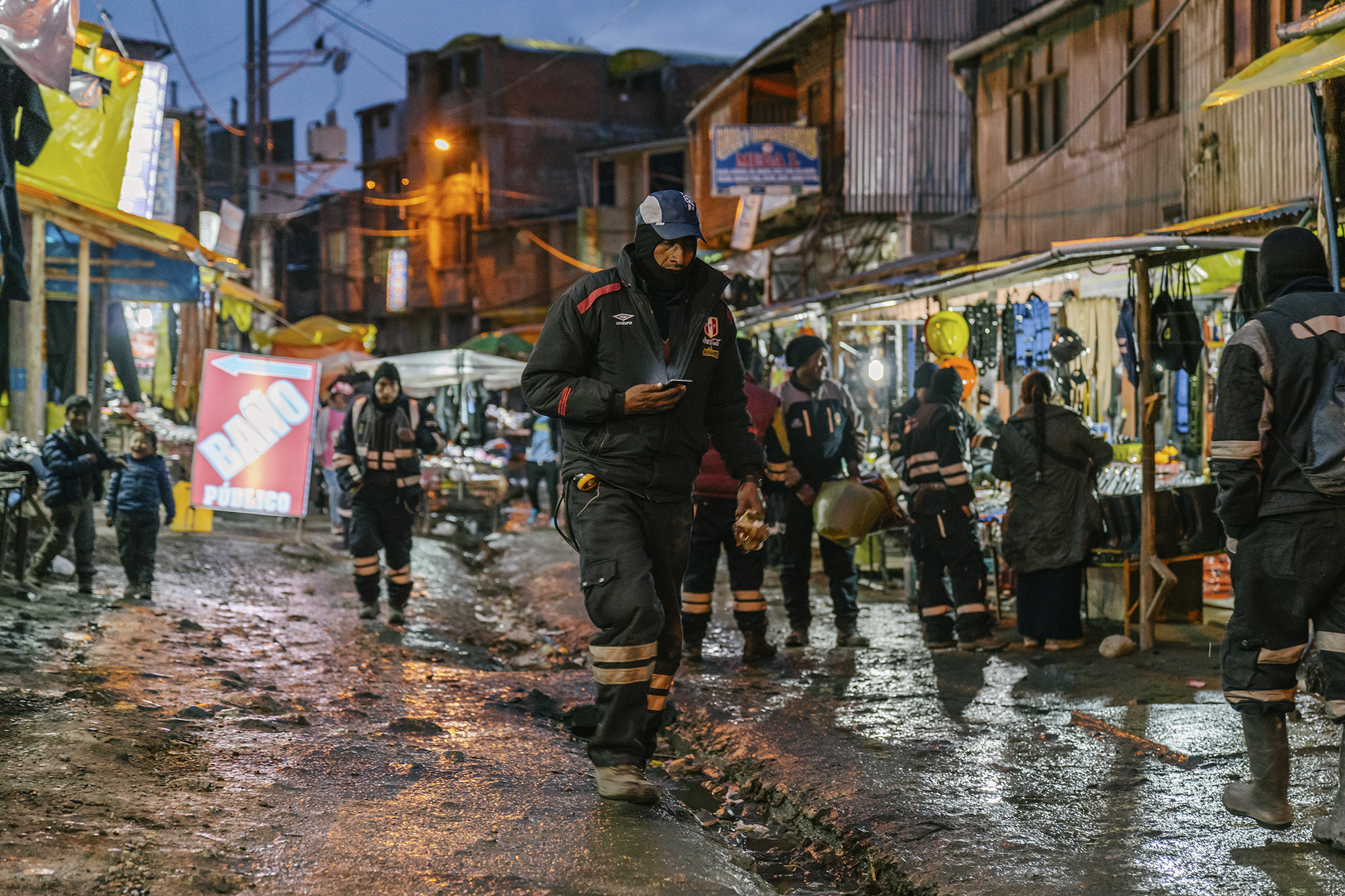
Vergès hopes the insights they gain will eventually atomic number 82 to a treatment for CMS. Meanwhile, he and Hancco hope to persuade more than Peruvian medical students to visit La Rinconada and to involve charities, such as Pharmacists Without Borders, which helps supply developing countries with medicines. Vergès said they are also hoping to persuade mine owners to take the health of the workers more seriously, as other, more regulated mines in Peru exercise. "This report, to me, is the start of a long-term commitment," Vergès said.
IN JUNE, 5 months afterwards leaving La Rinconada, Vergès's team presented some startling preliminary results at a loftier-distance physiology coming together in Chamonix. Compared with 20 Peruvians living at sea level and some other 20 from 3800 meters, the La Rinconada miners had colossal amounts of hemoglobin in their claret. Some carried more than two kilograms, the highest values ever reported, Vergès says. (Lowlanders living in Lima, by comparison, on boilerplate had 747 grams.) Merely reverse to his expectations—and what virtually hypotheses about CMS would predict—hemoglobin mass wasn't significantly college in men with CMS than in those without.
1 factor that did correlate with CMS, even so, was claret viscosity: People with thicker blood were more than likely to endure from the syndrome. Taken together, those two findings led Vergès to speculate that in some people, the physical backdrop of their cherry-red cells lower blood viscosity and their run a risk of CMS. Perchance their size or flexibility makes the cells menstruation amend, he said. Information technology was grist for a follow-up study.
The squad besides reported pulmonary blood force per unit area, which in healthy people is nearly 15 millimeters of mercury (mmHg). In CMS sufferers, it rose to some 30 mmHg during remainder and up to 50 mmHg during exercise. "Those are crazy values," Vergès says. "Y'all can inappreciably believe how the capillaries in the lungs can tolerate such pressure."
Electrocardiography showed that such loftier pressure affects the heart dramatically: The right ventricle—which pumps blood to the lungs through the pulmonary artery—expands, and its wall thickens. "The adjacent question is what long-term effects this has on the heart," Vergès said. The squad is still working through reams of other data, including those on genetics and epigenetics. But Vergès is already planning some other trip to La Rinconada, in February 2020.
Sucasaire, meanwhile, looked back at his participation in the study with mixed feelings. He had appreciated the attention merely hoped it would benefit his ain health; merely the thousands of physiological data points at present being analyzed in France didn't help. "The doctors were very kind, but I still don't have any results about whether I'thou sick or anything," Sucasaire wrote this month in a WhatsApp bulletin to Scientific discipline. His knees, which the team had not examined, were withal hurting.
Mountain life: Read more than from our special issue.
Producer and Web Developer: Xing Liu Photo Editor: Emily PetersenGraphics Editor: Alberto CuadraEditor: David MalakoffCreative Director: Beth Rakouskas

Source: https://vis.sciencemag.org/hypoxia-city/#:~:text=La%20Rinconada%20has%20no%20running,used%20to%20extract%20the%20gold.
Posted by: waldschmidthavemprought.blogspot.com
0 Response to "What Basic Facilities And Services Does La Rinconada Lack?"
Post a Comment